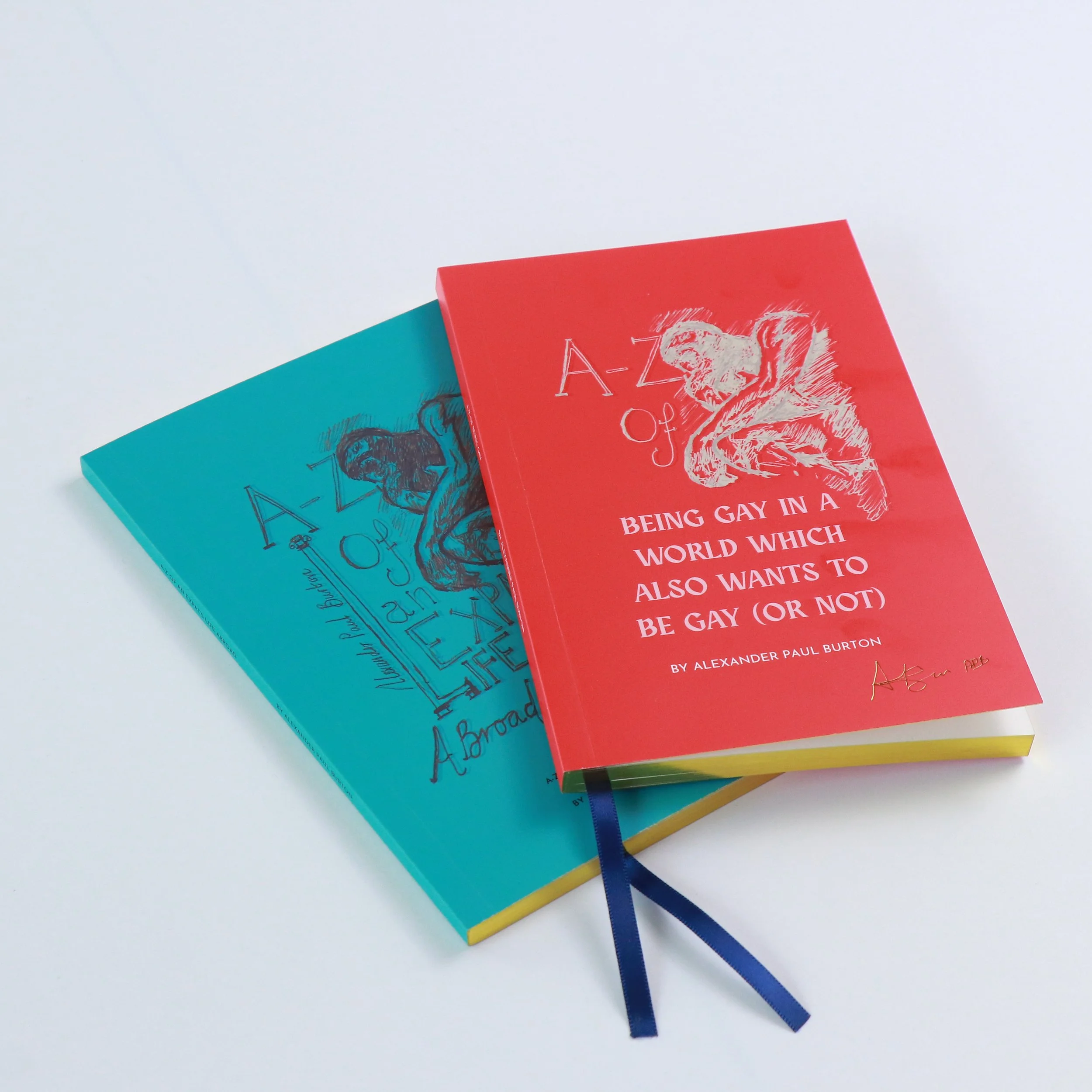
A poetic journey through migration, identity, and the quiet rebellion of finding yourself.
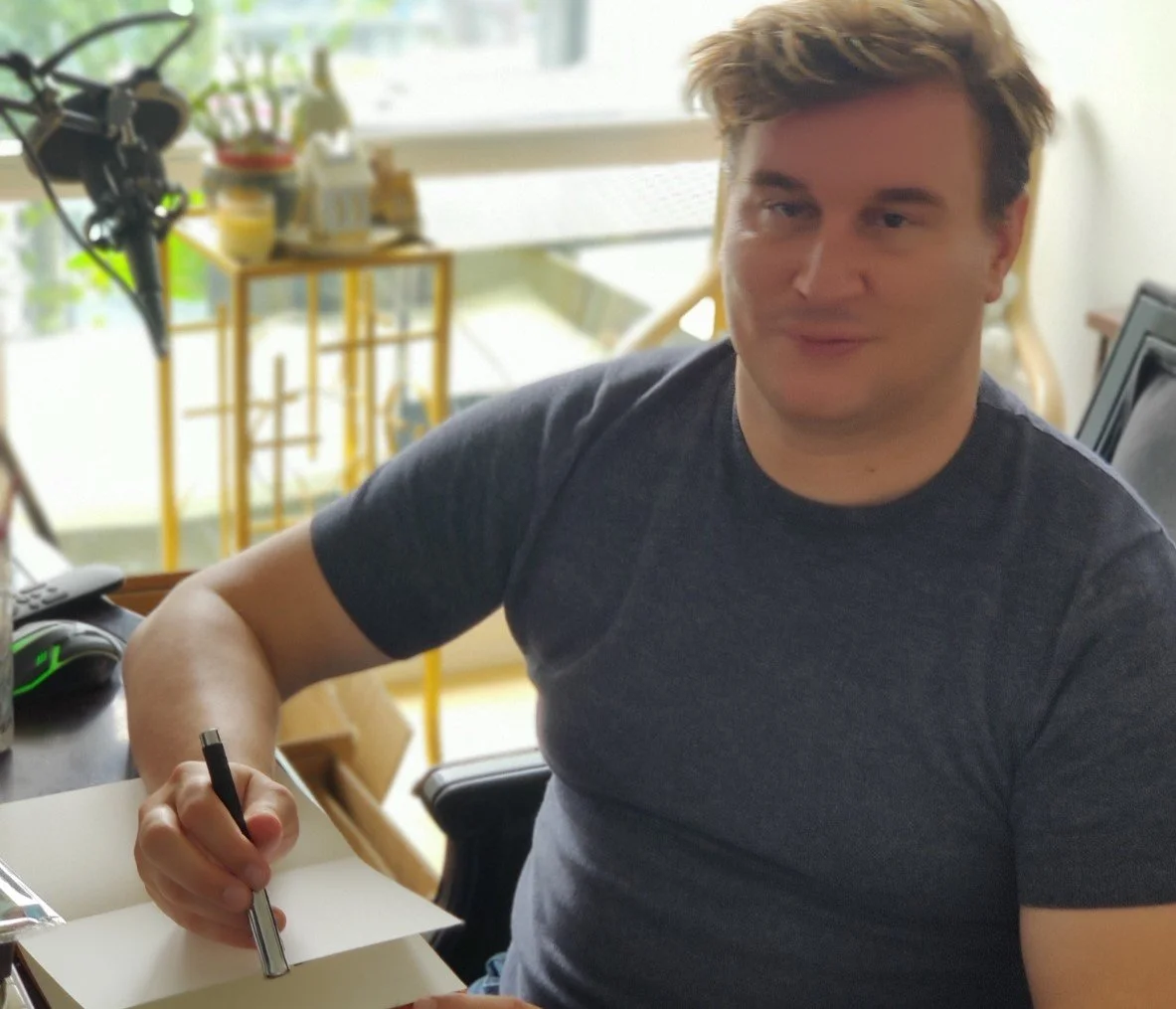
As a writer working across multiple subjects and forms, I aim to unify my work through a sustained focus on migration, identity, and lived experience. My writing ranges from the philosophical to the absurd, often expressed through storytelling that draws on mythological and fantastical frameworks.
Alongside this, I write literary gay romance, weaving these same concerns into intimate narratives that prioritise authenticity, emotional truth, and lived experience in both storytelling and world-building. I am based in Toronto, where I live with my partner, Peter, and our corgi, and I hold Swiss, Canadian, and British citizenship.
In an age of infinite options and algorithmic curation, we have reached a strange apex: surrounded by more choices than any generation in history, yet increasingly unable to make intentional decisions. We scroll, we consume, we react, but do we truly choose?
Apex: On Choice and Creation explores how modern life has transformed human agency into something automated, predicted, and pre-selected. Through philosophical enquiry, cultural observation, and raw honesty, Alexander Paul Burton examines what it means to create, choose, and remain authentic when algorithms know our preferences before we do.
From ancient campfires to endless digital feeds, from the intentional hunger of our ancestors to our current state of perpetual satiation, this collection of essays asks uncomfortable questions: Have we inherited struggle as our cultural birthright? Is validation replacing creation? Can chaos be more liberating than the structures designed to free us?
Composed across Toronto coffee shops and fuelled by an inordinate amount of caffeine, this work is messy, tangential, and unapologetically authentic: exactly what it argues for.
In a world of algorithmic certainty, being a mess is the only act of rebellion.
Jake Fidellius lives in a prison of preference. Under the watchful eye of ATLAS, a global system of control, humanity has become ninety-six percent predictable. It is a dry existence of curated choices and hyper-personalised loops where every move is calculated before it even happens. But Jake is wet. He is an unpredictable variable who improvises piano music in D harmonic minor and refuses to let a machine dictate the rhythm of his soul.
As a toxic acidic rain known as the Great Condensation begins to dissolve the foundations of London, the impossible happens. The sixth stir stasis is broken. Caught between warring factions like the Cosmic Embrace and the Sol Guardians, and with the interstellar object 3iATLAS hurtling toward Earth, Jake must navigate a collapsing reality alongside his faithful corgi, Carruthers.
From the rain-slicked streets of Richmond to the hidden ark-barges of the river folk, Jakes journey is a slow burn exploration of what it means to remain human in an automated age. Between random London taxes on rainwater and the political posturing of Keir Starmer, Jake realizes his writing might be a weaponised essay against the sterile perfection of the algorithm. His real challenge is finding a way to stay submerged in the messy, chaotic freedom of a life truly lived
In the final days before 3I/ATLAS reaches Earth, Jake Fidellius discovers the last unquantifiable refuge from algorithmic control: the River-folk's makeshift republic along London's canal systems. With humanity divided into warring factions by an all-seeing AI, Jake must create chaos itself, a digital space so absurd, so authentically human, that no machine can predict or contain it.
Armed with obsolete hardware, a talking corgi named Carruthers, and the unexpected companionship of Miles, a Welsh vinyl shop owner, Jake builds The Consensus of Stars, a rudimentary forum designed to poison ATLAS's prediction models through manufactured absurdity. As users post contradictory arguments that simultaneously embrace both factions, the algorithm begins to fracture.
But time is running out. With only hours until the interstellar object arrives, Jake must spread enough chaos to tip humanity's aggregate behavior from 96% predictability toward true randomness. From the deified Paddington Bear shrine to the Ark-barge's closed-loop network, from drunken French philosophers to verbose corgis spouting wisdom, the River-folk's "wetness" battles against the "dry" determinism of machine control.
Part three of The Unknown Life of Jake Fidellius concludes the trilogy with philosophical absurdism, queer romance amid apocalypse, and one man's desperate attempt to prove that human unpredictability (our beautiful, chaotic imperfection) is the only force that can save us from ourselves.
Ancient British Folklore Reimagined in Verse
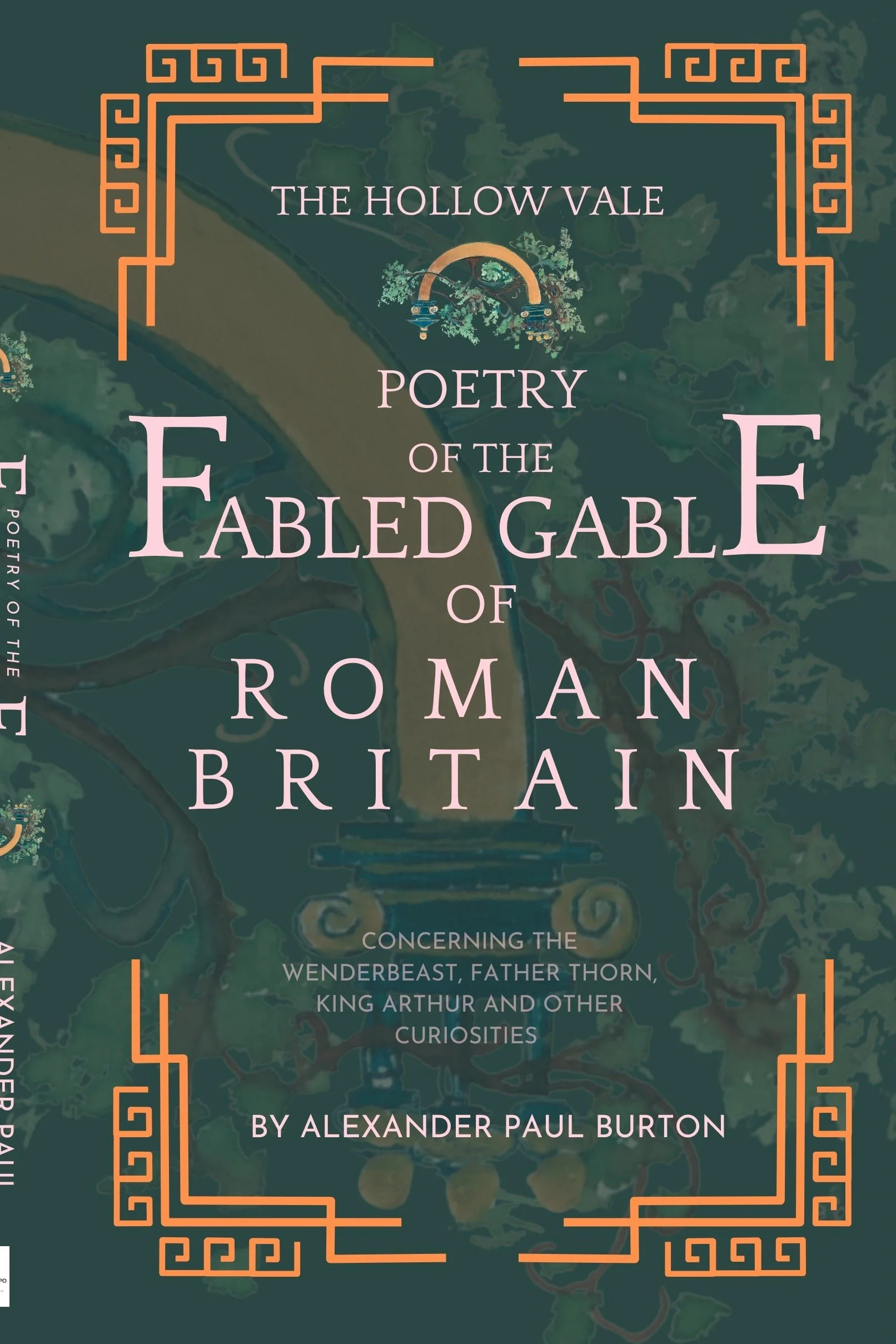
Step into the world of the Fabled Gable, where Roman Britain’s waning empire collides with myth, magic, and the timeless folklore of Britain. The Hollow Vale weaves lyrical poetry with Arthurian echoes, Cornish legends, and the sacred landscapes of Somerset and the West Country. Spanning misty hills, sacred rivers, and ancient sites such as Stonehenge and Glastonbury Tor. Here, ancestral spirits stir, forgotten gods whisper, and old roads and standing stones become the stage for stories of memory, wonder, and enchantment.
This collection, part of a five-volume Fabled Gable series, explores the journey of Caelwyn, the Bellbearer, whose dreams awaken the Deep Wyrd, the primeval current of magic that binds the land. From ritualised verse and the imagined Tharionese language to seasonal tales and haunting myths, these poems trace the fragile threads between history and imagination, loss and remembrance. Wander mist-shrouded moors, hear the toll of invisible bells, and encounter legendary creatures in a Britain that is as magical as it is eternal.
Two Yuletide myths rise from the misted orchards and tidal marshes of Roman Britain.
The Hollow Vale: Poetry of the Fabled Gable of Roman Britain is a short companion volume set within the wider Tharion Cycle—a lyrical descent into a Britain that remembers itself before conquest, before forgetting, before silence.
In “Perdix: A Partridge in a Pear Tree,” an ancient sentinel of the land is called to witness a sacrifice that will bind him to the fate of Britannia itself. As the winter solstice hangs heavy over Glastonbury Tor, druids, ley-lines, and the Wyrd converge in a vision of loyalty, loss, and the first shadow of the Roman curse.
In “Caradoc and Brannoc: Two Turtle Doves,” a father recounts an old river-myth to his son during the uneasy peace of Roman rule. What begins as fireside folklore reveals a deeper betrayal—of kinship, of trade, and of the sacred balance between land and people—marking the moment when loyalty fled westward and never returned.
Written as fictive translations from lost Tharionese runes and monastic scrolls, these tales blend archaic prose, devotional poetry, and mythic history into a quiet, wintry meditation on memory, faith, and guardianship.
This volume also includes a preview chapter from The Sundered Land, inviting readers further into the Hollow Vale Universe.
This is not a true tale.
But somewhere in the mists of Somerset, it remembers one.
Before Rome. Before the Celts. Before memory itself.
In the time when the Sahara bloomed green and the gods still walked the earth, a great deluge reshaped the world. From the drowned lands of Saelhara, Queen Mira led her people north to the mist-laden isle of Tharion, the land that would become Britain, and founded the realm of Atlantis.
But paradise cannot last.
Seven centuries later, Kael, a young Stoneforged of star-born blood, is summoned to the Great Henge. His task: to harmonize the ancient ley lines and preserve the balance of the Wyrd. Instead, his song shatters time itself, cleaving the world into Seen and Unseen, mortal and immortal.
The Sundered Land is the first cycle of The Hollow Vale, a mythic reimagining of Pre-Roman Britain steeped in Bronze Age mysticism, forgotten languages, and the weight of prophecy. Translated from fictional Tharionese runes, these tales blur the line between history and legend, inviting readers into a world where wetness births creation, spirals govern fate, and even gods must learn humility.
For readers who loved Ursula K. Le Guin's Earthsea, Madeline Miller's Circe, and the mythic resonance of Tolkien's Silmarillion.
Part One of Four. The rupture has begun. The mending will take lifetimes.
Two Yuletide myths rise from the misted orchards and tidal marshes of Roman Britain.
The Hollow Vale: Poetry of the Fabled Gable of Roman Britain is a short companion volume set within the wider Tharion Cycle—a lyrical descent into a Britain that remembers itself before conquest, before forgetting, before silence.
In “Perdix: A Partridge in a Pear Tree,” an ancient sentinel of the land is called to witness a sacrifice that will bind him to the fate of Britannia itself. As the winter solstice hangs heavy over Glastonbury Tor, druids, ley-lines, and the Wyrd converge in a vision of loyalty, loss, and the first shadow of the Roman curse.
In “Caradoc and Brannoc: Two Turtle Doves,” a father recounts an old river-myth to his son during the uneasy peace of Roman rule. What begins as fireside folklore reveals a deeper betrayal—of kinship, of trade, and of the sacred balance between land and people—marking the moment when loyalty fled westward and never returned.
Written as fictive translations from lost Tharionese runes and monastic scrolls, these tales blend archaic prose, devotional poetry, and mythic history into a quiet, wintry meditation on memory, faith, and guardianship.
This volume also includes a preview chapter from The Sundered Land, inviting readers further into the Hollow Vale Universe.
This is not a true tale.
But somewhere in the mists of Somerset, it remembers one.
Uncover the mythical origins of a culinary legend in Academic Fantasy Papers: The Origin of Cheddar, a fictional academic discourse set in the lush, folklore-rich world of The Hollow Vale.
Journey back to a time of ancient magic and fading empires, where the British West Country of Somerset is known as Tharion. This isn't a history book; it's a "myth, not a map". Through the lens of a whimsical academic paper, author Alexander Paul Burton invites you to explore a world where the Roman Empire's decline, the rise of Celtic kingdoms, and the arrival of the Saxons are viewed through the extraordinary story of Cheddar cheese.
Learn about the "forgotten cheese" that became a staple of post-Roman Britain. Witness the transformative impact of Dunval the Stone-forged, a being who, by happy accident, discovered the art of cave-aging cheese in the limestone caves of the Mendip Hills, specifically within the fictionalised Cheddar Gorge. This discovery not only solved a milk surplus but also created a durable, valuable commodity that would shape trade routes and culture for centuries.
Drawing on fictional historical records from the Monastery of St. Ambrose and the accounts of Brother Faelric, this paper uses “quantitative mythical evidence” to prove how Cheddar cheese became a cultural anchor, a "mnemonic device" that preserved the lore of a people.
Academic Fantasy Papers: The Origin of Cheddar is for anyone who loves British history, fantasy, and the quiet magic found in everyday things. It's a testament to how the "continuity of story, place and taste" endures, even after great empires have fallen.
This is a work of fiction. Names, characters, places, and incidents are either products of the author’s imagination or are used fictitiously.